
When a [RFP] Request for Proposal or [RFQ] Request for Quotation is received requesting a Service Provider to provide a cost on a package of works, one of the first things the tenderer will need to do is to acknowledge receipt of the proposal, and confirm that they will or will not provide a bid for the works.
The best way to do this is to issue an ‘RFP / RFQ Acknowledgement Letter’; the letter should focus on the following points:
- Title – usually be the project title or project reference number,
- Who – include who the acknowledgment is addressed,
- A Statement – noting the receipt of the RFP/RFQ,
- Conflicts – note if there are or are not any conflicts of interest,
- Confirmation – if you will or will not provide a proposal,
- Reason – if not providing a cost, offer a high-level explanation as to why,
- Scope – statement that upon initial review of the documents, you can meet the requirements
- Return of documents – if not providing a proposal, state how will the documents be managed,
- Return of letter – include information about where the letter was/is to be sent,
- General Information – include particular information on the person issuing the letter, for example, name, title, address, telephone number,
Below we explain a little more about the above.
Who is Responsible for Creating the Acknowledgement Letter?

The letter can be created in a couple of ways:
- As a template created by the client to standardize the format and information required, if this is not provided, then,
- As a general letter made by the vendor/contractor, using their internal layout.

When should the Letter be Issued?
Within the overall tender package, there will usually be a table detailing the expected dates for completion of the tendering steps.
Usually, this letter will be written and issued within a few days of receipt of the tendering documents.
If you would like to understand more on the Tendering Process, please see our article 'TENDERING PROCESS | How to Complete in 20 Steps' for a detailed explination and downloads.

Where should the Letter be Sent?
You will need to review the RFP / RFQ, as there will be details of how and where the letter will be sent. Methods could be:
- Emailing to a specific project address,
- Posting to a physical address, or less commonly nowadays,
- Faxing to a dedicated fax number.
If you would like to understand more on RFP/RFQ's, please see our article 'REQUEST FOR PROPOSAL | [RFP] How to write and format' for a detailed explination and template.

RFP / RFQ Acknowledgement Letter / Email Format [MS Word]
We have created the template letter below that can be purchased and used for issuing in either ‘Letter’ or ‘Email’ formats:
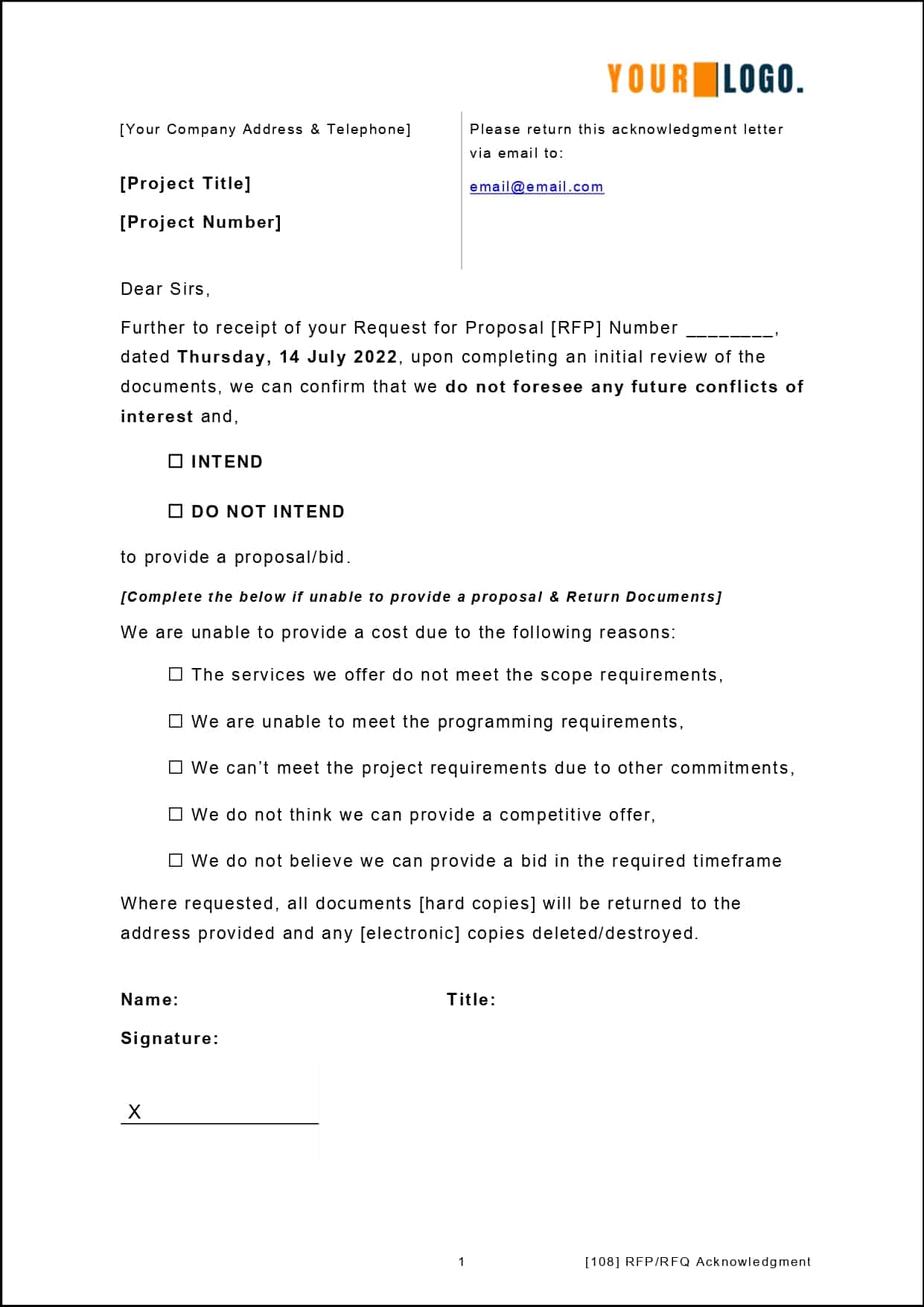
![Acknowledgment of RFP/RFQ Template [MS Word]](https://constructandcommission.com/wp-content/uploads/2022/07/108-RFP-RFQ-Acknowledgement-of-Tender.webp)
Here is our ACKNOWLEDGMENT OF RFP/RFQ TEMPLATE Document in [MS Word] that can be bought for your Editing and Use, based upon our article.
We have put together this bundle so you can get all related documents, and buying them together provides even better value [Over 50% Off], as shown below.
Included - 20 Tendering Steps Guideline Document | 20 Step Tendering Process Graphic | Tender Interview Agenda Example | Tender Interview Question Examples | Prequalification of Tenderer Document Template | CxA Request for Proposal [RFP] Template | CxA Scope of Work [SOW] Template | Acknowledgment of RFP/RFQ | Request For Information [RFI] Template | Request For Information [RFI] Tracker/Log.
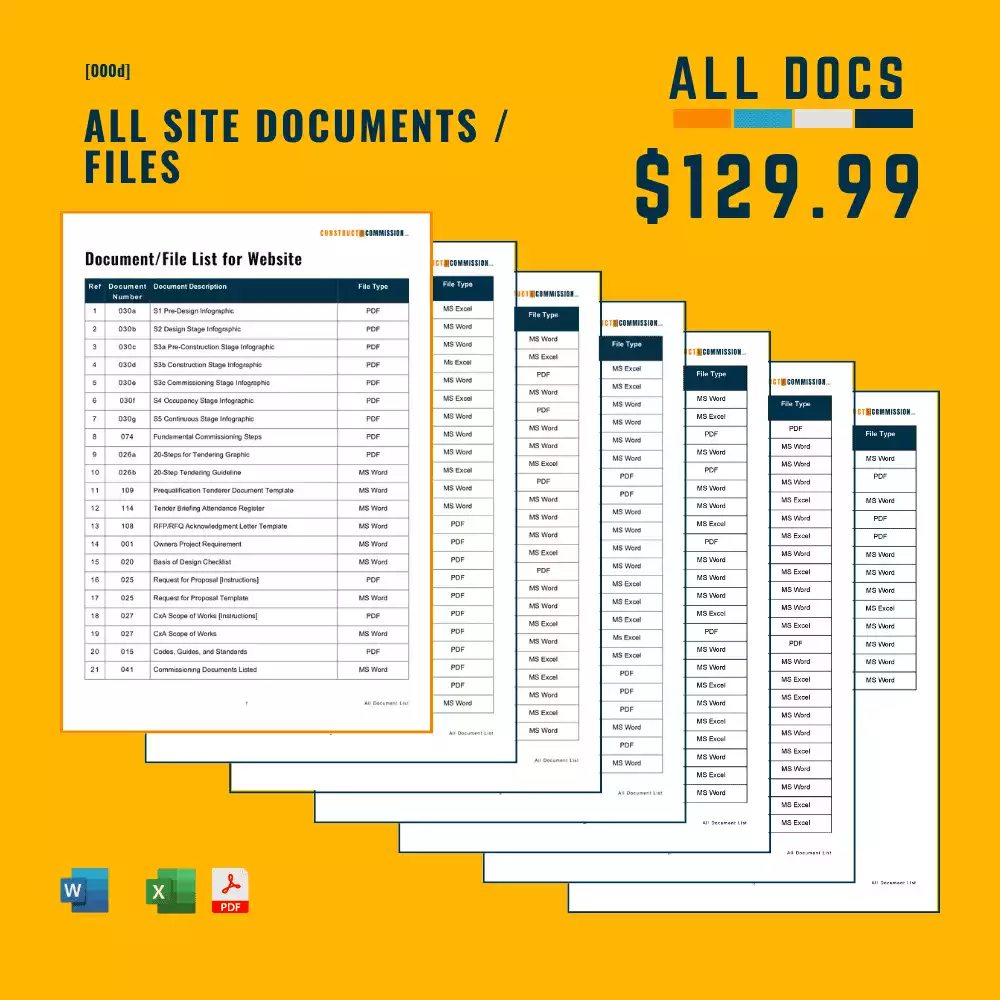
We have been asked several times to create a complete document package covering everything we have uploaded to the site.
So it's taken some time, but here it is....126No. Documents for you to download in Microsoft Word, Microsoft Excel & PDF Formats.
CLICK THE BUY HERE TO SEE/DOWNLOAD A FULL LIST OF DOCUMENTS INCLUDED...
⬛ Related Articles
RFI vs RFQ vs RFP | Understanding the Differences
PREQUALIFICATION OF TENDERERS | How to Conduct, Manage & Complete
[RFI] REQUEST FOR INFORMATION | What is it in Construction with Templates
TENDER BRIEFING SESSION | How to Conduct with downloads
